Seals help oceanographer study Southern Ocean
Adapted · C2 · Graded story · 4:18 · C2
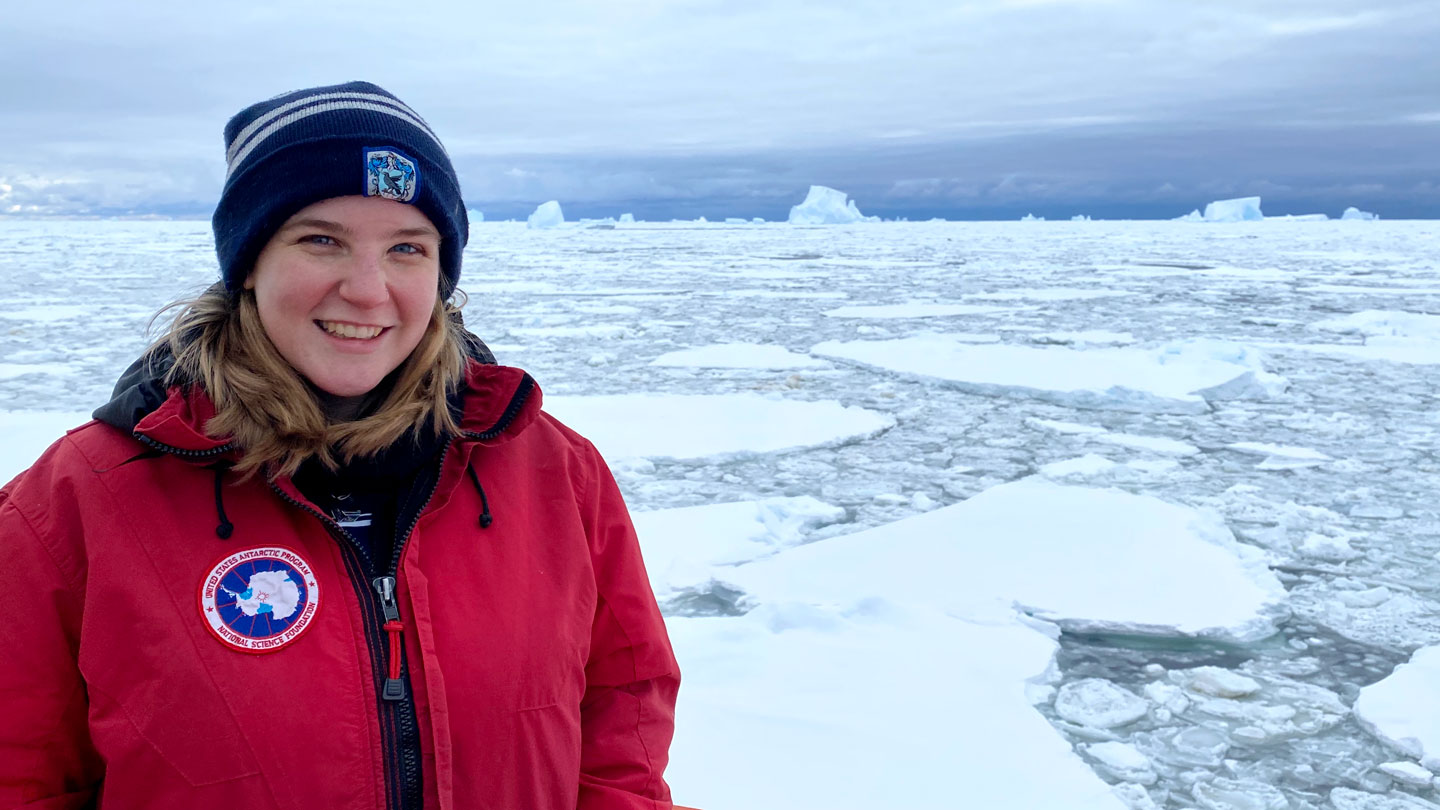
While at Brown University in Providence, R.I., oceanographer Lily Dove studied the physics of Antarctica's Southern Ocean with help from unusual assistants: Antarctic seals. She regards the seals as oceanographers because they regularly dive into parts of the ocean that researchers rarely sample.
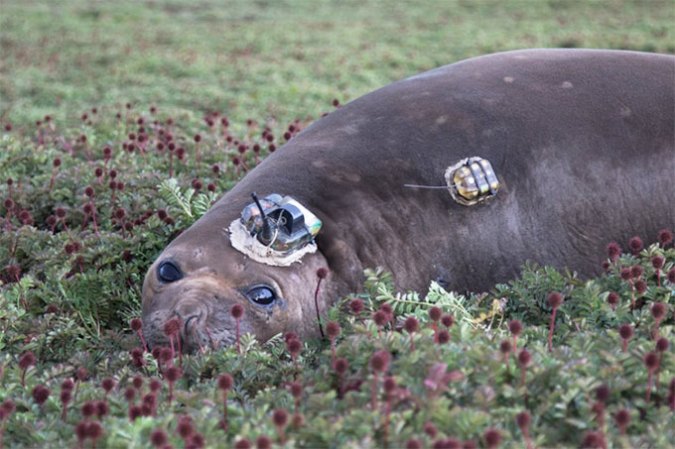
Dove did not work directly with the animals. Instead, she analyzed data collected by the Marine Mammals Exploring the Oceans Pole to Pole program, an international collaboration that attaches sensors to the foreheads of southern elephant seals and Weddell seals. The seals dive more than 100 meters (330 feet) to find food, enabling researchers to measure temperature, salinity and pressure at depths beyond human divers.
Using these data, Dove examined how climate change is altering the Southern Ocean, the vast sea that encircles Antarctica. In some regions, heat moves from the surface downward; once it sinks, it can remain trapped for hundreds of years and raise deep-ocean temperatures.
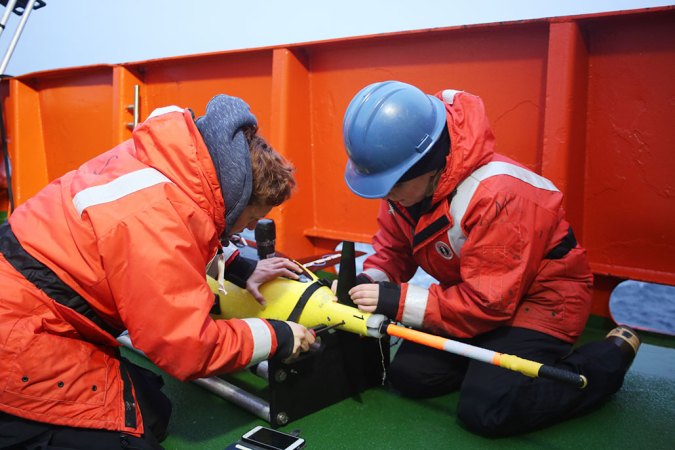
Now at the Georgia Institute of Technology, Dove works with autonomous robots to study polar oceans. Some devices, called floats, drift with currents; others, such as gliders, are remotely piloted underwater vehicles that can be steered to specific locations. The work is all remote; she can sit in Georgia and direct a glider in a distant hemisphere.
This technology is more predictable than relying on animal assistants. Seals are independent, but unlike a glider, the animals do not stay on a preplanned course; they determine their own routes.
In an interview, Dove shares her experiences and advice with Science News Explores, and the piece has been edited for content and readability.
Growing up in Florida, the ocean fascinated her as a powerful system we depend on, yet she did not initially consider it a career. She enjoyed science, especially physics and chemistry, and she changed majors several times in college while searching for a path. Eventually she realized those subjects helped explain the Earth and its environment, and she recognized the need for many branches of science to understand the Earth system, including biology, physics, chemistry and geology. She ended up researching atmospheric chemistry.
During graduate study, she shifted the skills of atmospheric chemistry toward oceanography because the atmosphere and the ocean share the same physics. The transition felt natural, and she joined a group studying polar oceans, a field she had not anticipated pursuing. She visited the Southern Ocean for the first time in 2020. Polar oceans are remote, far from most people, but they have a huge influence on the climate system, especially the Southern Ocean, and that realization confirmed her path.
She has faced discrimination in the field as a woman, facing assumptions about who belongs in polar science. Historically, women were not included on research cruises, and some even stowed away on ships to obtain data for their theses. There is a famous case at the Woods Hole Oceanographic Institution of a woman stowing away on a research vessel in the 1950s. The bias persists to an extent, but it is changing. Discrimination also affects people of color, queer people and disabled individuals.
Throughout her time in the field and in academia, there have been moments when people assumed she could not do something. That frustration is painful, but it has also given her the skill to speak up and advocate for herself.
Her advice is to say yes to as many opportunities as possible: attend events, talk with scientists or take a course. The worst-case scenario is that you learn something new that is not particularly interesting to you; the best-case scenario is that something grabs your attention and becomes a lasting focus.
Dove says she is glad she did not fixate on a single area too early. She benefited from a broad foundation across many fields before choosing a focus, which has made her flexible and open to new ideas.
For anyone who already knows a specific goal, following their instincts can help; but if you are unsure, learning broadly is a wise way to begin.
Comments
0Share what you noticed, understood, or still find difficult in this article.