Why Sweat Cools You Only When It Evaporates
Adapted · C1 · Graded story · 1:43 · C1 · AI-generated learning content
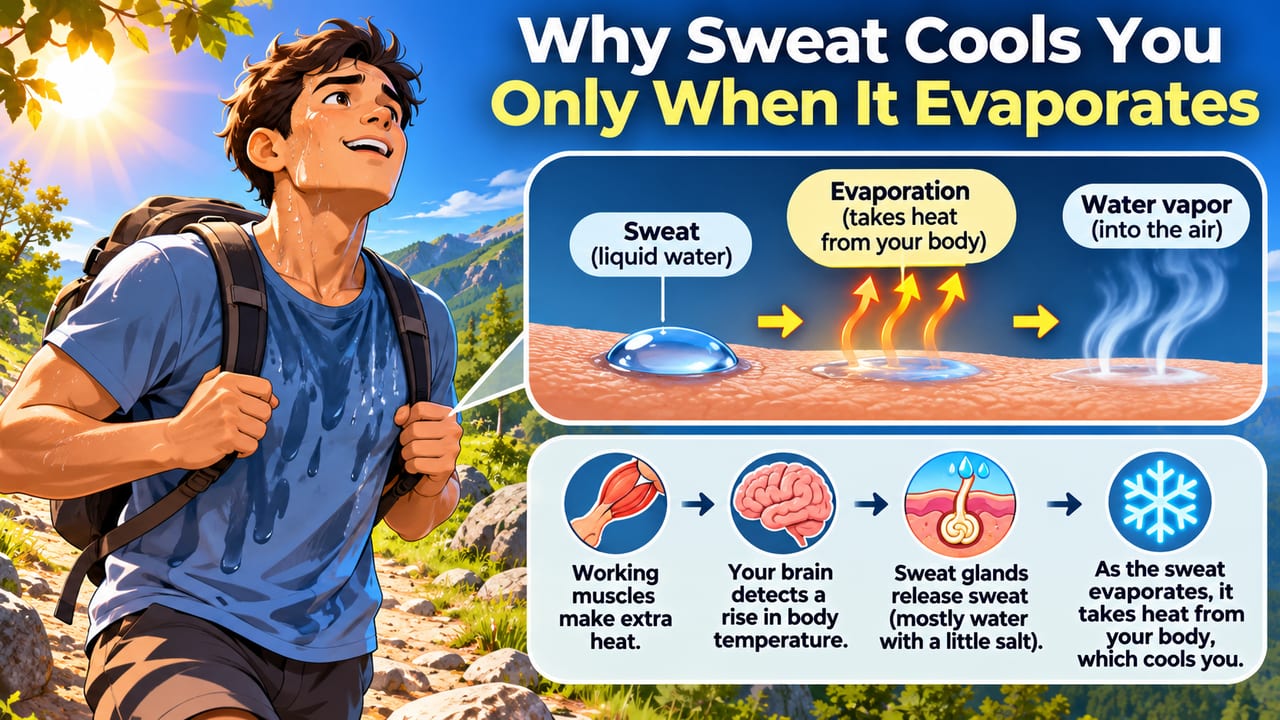
On a hot day, a wet shirt can seem like proof that your body is cooling down. But producing sweat is only part of the process. The main cooling happens when that liquid evaporates: it changes into water vapor, the gas form of water, and enters the air.
Your body produces heat constantly as it uses energy. Working muscles generate extra heat, so walking uphill can make you warm even on a cool day. When your brain detects a rise in body temperature, it can signal tiny sweat glands, structures in your skin that release sweat. Sweat is mostly water with a small amount of salt.
Changing liquid water into gas requires energy. As sweat evaporates from your skin, it takes some of that energy as heat from your body, helping you cool down. Sweat that falls to the ground does not provide the same cooling benefit because it leaves your skin before it can evaporate there.
The surrounding air makes a considerable difference. In dry air, sweat can usually evaporate more easily. In humid air, there is already a lot of water vapor around you, so evaporation is slower. You may feel very wet but still uncomfortably hot. Moving air can help by carrying away the damp air close to your skin and replacing it with air that allows more evaporation.
Visible sweat is therefore not a simple measure of cooling, effort, or fitness. People sweat differently, and clothing, weather, and activity all affect what happens to that moisture. Sweat may also evaporate before you notice it.
The useful distinction is between producing sweat and losing heat. Your body supplies the water, but conditions around your skin help determine how effectively that water can cool you.
Comments
0Share what you noticed, understood, or still find difficult in this article.