Why Astronauts Float Above Earth
Graded story · 1:58 · B1 · AI-generated learning content
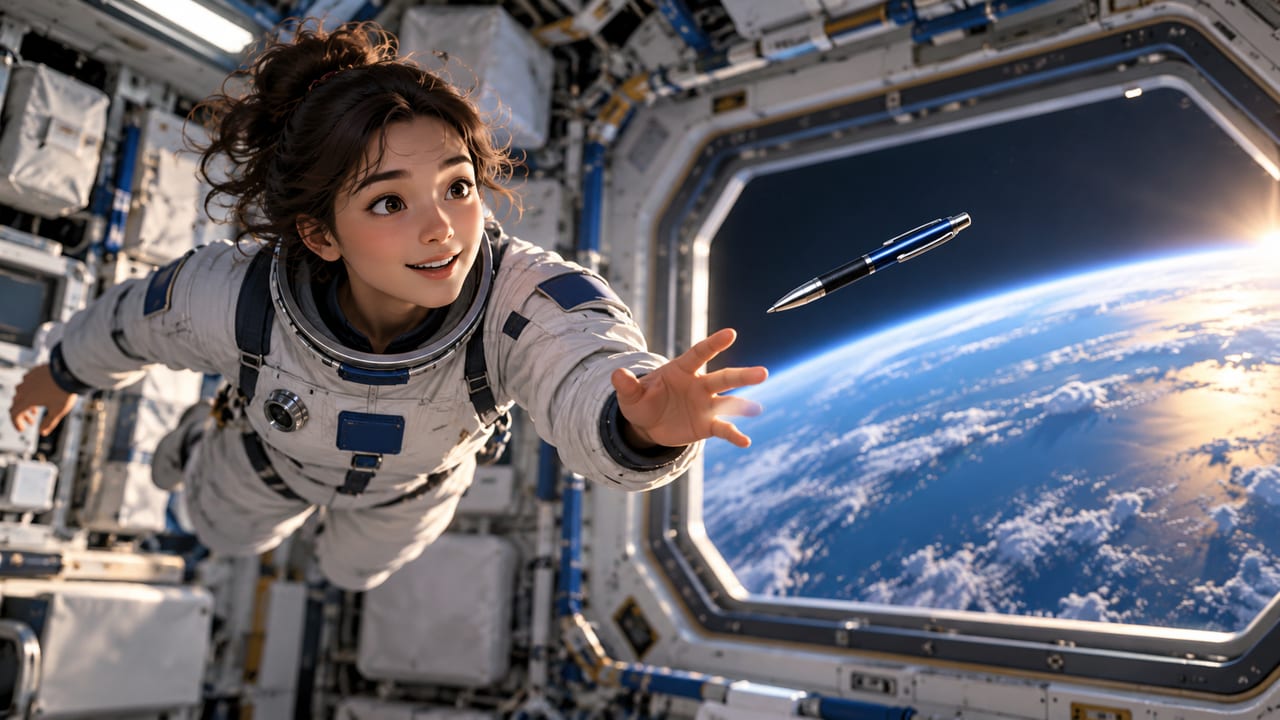
An astronaut releases a pen inside a space station. Instead of dropping to the floor, it floats nearby. This looks as if Earth's gravity has disappeared. But gravity is still pulling on both the astronaut and the pen. Their floating has a different cause: they are falling together.
On the ground, gravity pulls you downward. The floor stops you from falling and pushes upward against your feet. This support helps create the feeling of weight. Inside an orbiting space station, the floor does not need to support the astronauts in the same way. The station, its crew, and loose objects are all falling around Earth together.
But why does the station not hit the ground? The key is its sideways speed. Imagine throwing a ball across a field. As it moves forward, gravity pulls it down, so its path curves toward the ground. An orbiting spacecraft moves sideways so fast that, as its path curves downward, Earth's surface curves away beneath it. It keeps falling without reaching the surface. This continuous path around Earth is an orbit.
At the height of the International Space Station, Earth's gravity is only a little weaker than it is at the surface. Being far from the ground is therefore not enough to explain floating. What matters is the shared fall. If an astronaut lets go of a pen without pushing it, both continue moving along almost the same path.
Floating also does not mean that objects lose their mass. A large piece of equipment still takes effort to start moving or to stop. Astronauts must handle heavy objects carefully, even when they can move them without lifting against a floor.
The Moon and many satellites also remain in orbit through the same basic balance of forward motion and gravity. Gravity is not missing from these scenes. It is what makes their curved journeys possible.
Comments
0Share what you noticed, understood, or still find difficult in this article.