Where Will Tomorrow's Electricity Wait?
Adapted · C1 · Graded story · 2:06 · C1 · AI-generated learning content
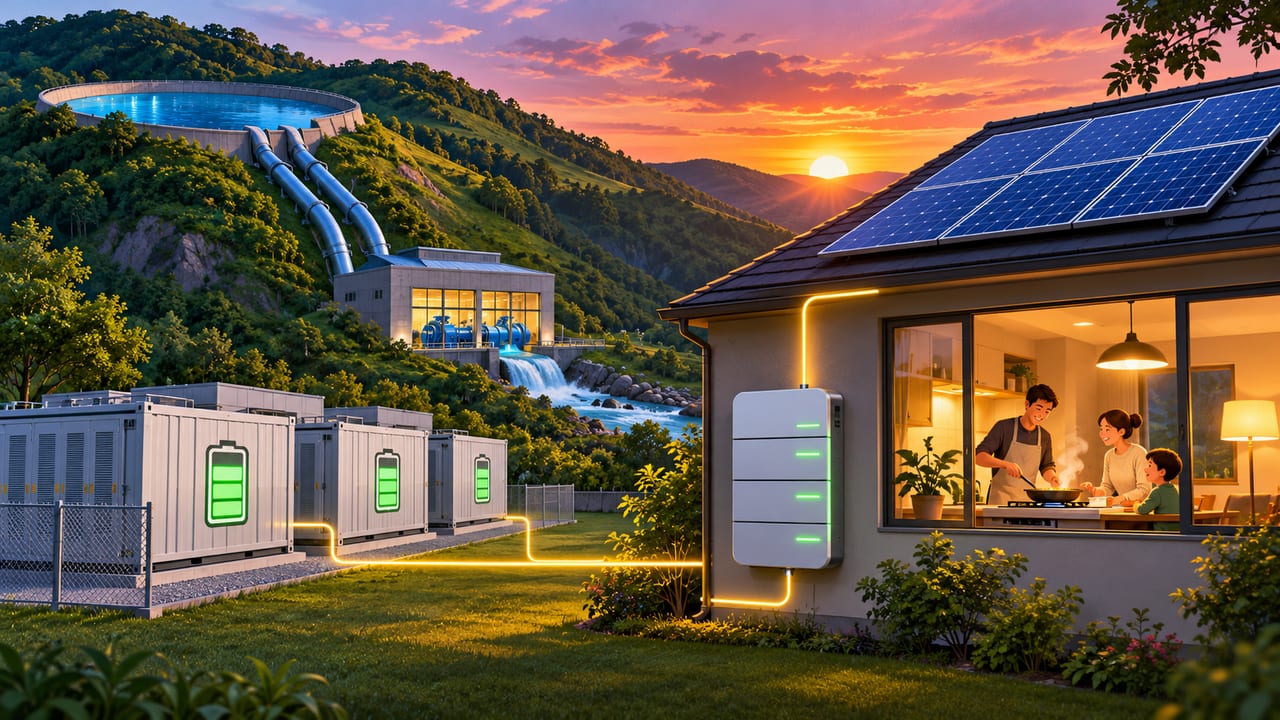
Solar panels can produce plenty of electricity at lunchtime, when many homes are empty. Later, people return, cook dinner, and switch on lights as the sun goes down. Over the next 10–30 years, storing electricity could become a more familiar part of everyday life. But what can we reasonably expect?
Some answers already exist. Batteries store energy through chemical changes and release it as electricity when needed. Large battery systems already help electricity networks balance supply and demand. Another established method uses electricity to pump water uphill. When the water flows back down through turbines—machines driven by flowing water—it generates electricity. Neither method creates extra energy, and some energy is lost in the process.
The International Energy Agency's analysis of future energy systems suggests that battery storage will play a growing role as wind and solar power expand. This expectation is based on models of energy systems, not a promise about exactly what will happen. Over the coming decades, storage could allow more daytime solar energy to be used in the evening. Some homes and businesses already do this with their own batteries; larger systems can serve the wider network.
However, storing energy for a few hours is different from keeping it for several cloudy, calm days. Researchers and companies are developing other approaches, including different battery designs and systems that store energy as heat. These methods do not all serve the same purpose. Stored heat, for example, can be used directly in factories without being turned back into electricity.
Which combination will become most common remains uncertain. Cost, available materials, local geography, and the length of time energy must be stored all matter. A successful test does not automatically mean a system will work cheaply on a large scale.
Tomorrow's energy storage will probably not be one amazing box. A more realistic possibility is a collection of tools, each suited to a different need.
Comments
0Share what you noticed, understood, or still find difficult in this article.