When Ice Traveled by Ship
Adapted · C1 · Graded story · 2:01 · C1 · AI-generated learning content
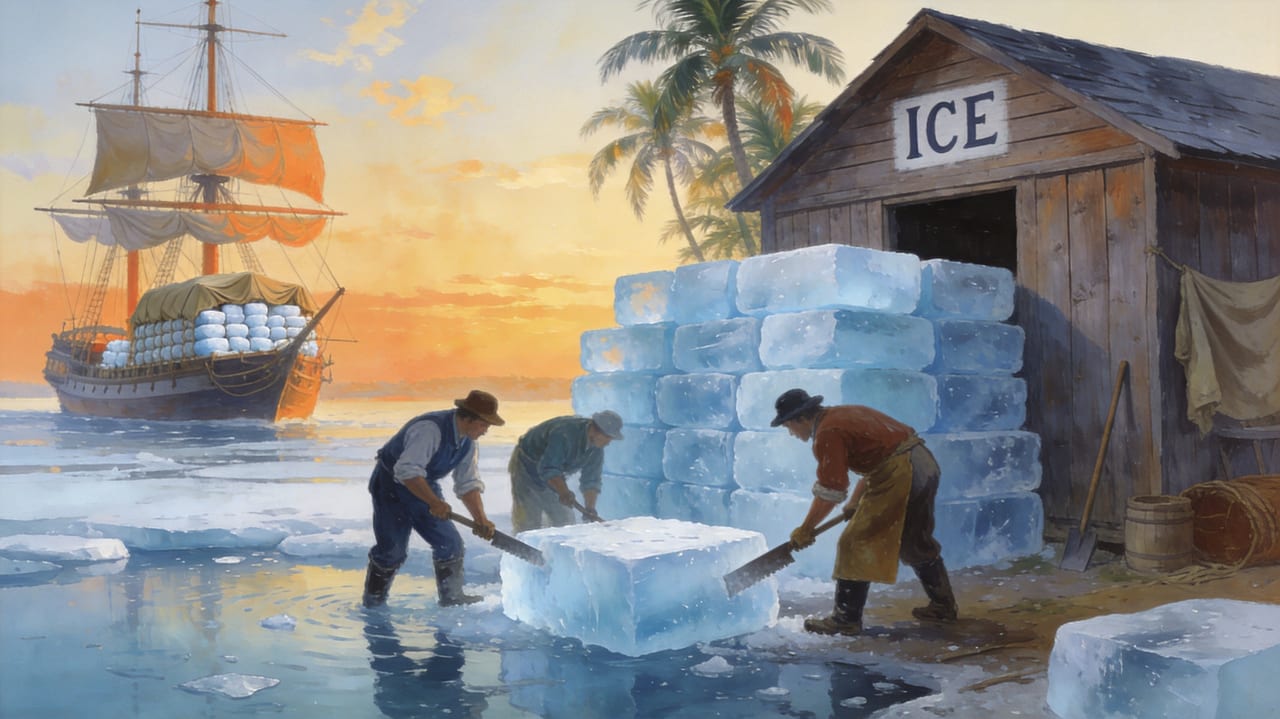
A cold drink on a hot day once depended on a surprising journey. During the nineteenth century, businesses shipped natural ice from cold regions to warmer places. Ice cut from lakes and ponds in New England traveled as far as the Caribbean and India.
The trade relied on a seasonal resource: winter cold. Workers cut thick ice into large blocks and moved them into storage buildings called icehouses. This was heavy, difficult work. A business needed more than a frozen pond: it also required workers, transport, storage space, and customers who could afford the ice.
But how could ice survive a long sea journey? The aim was not to prevent melting completely, but to slow it enough. Large blocks were packed close together, and materials such as sawdust—the fine pieces of wood left after cutting—helped keep outside heat away. Some ice melted during storage and transport, but enough could remain to sell at the destination. The amount lost was an important business concern.
In towns and cities, dealers delivered blocks to homes and businesses. Before electric refrigerators became common, some households used an icebox: a cupboard with space for ice. As the ice melted, it absorbed heat, helping keep food cool. The resulting water had to be collected or drained away, and the ice needed regular replacement. Cooling was therefore a repeated delivery service, not simply a machine in the kitchen.
Access was unequal. Ice cost money, and reliable supplies depended on location, transport, and storage. A hot summer could increase demand just when keeping ice frozen was most difficult.
Machines that made ice later reduced dependence on frozen lakes. Electric home refrigerators gradually changed the system again, though the transition happened at different speeds in different places. The natural ice trade reveals a less familiar side of everyday history: people built a long-distance business around moving winter cold into summer heat.
Comments
0Share what you noticed, understood, or still find difficult in this article.