Why Metal Feels Colder Than Wood
Adapted · B2 · 分级文章 · 1:49 · B2 · 内容由 AI 生成
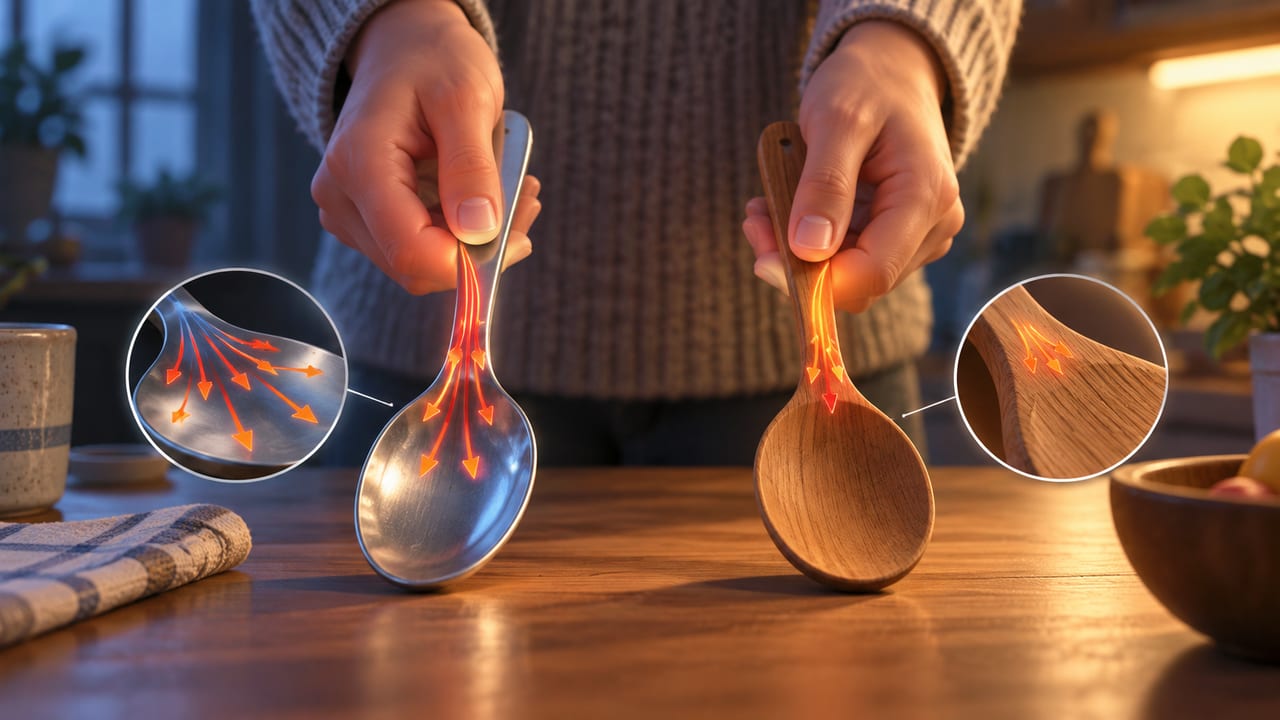
A metal spoon and a wooden spoon have been sitting in the same kitchen all night. When you pick them up, the metal one feels colder. Is its temperature actually lower? Usually, no. The difference is how quickly heat moves.
If both spoons have been away from sunlight, heaters, and other heat sources for long enough, they will be close to room temperature. In a typical cool room, your hands are warmer than either spoon. When you touch one, heat moves from your skin into it.
Metal allows heat to travel through it easily. It quickly carries heat away from where your fingers touch, spreading it through the rest of the spoon. Your skin loses heat quickly, so the metal feels cold. Wood slows this movement. The small area under your fingers warms up, but the heat does not spread through the wood as easily. Your skin therefore loses heat more slowly.
This difference in how materials carry heat explains other familiar experiences. A tile floor often feels colder than a rug in the same room because the tiles carry heat away from your bare feet faster. The rug, including the air trapped between its threads, slows that movement.
The same idea helps explain why a cloth can slow the melting of an ice cube. The cloth does not create cold. Instead, it slows the movement of heat from the warmer surroundings into the ice.
However, touch cannot always tell you an object's temperature. Something in direct sunlight may actually be warmer than something in the shade. If an object is hotter than your skin, heat moves toward your hand rather than away from it. Do not test hot objects by touching them.
Your skin helps you notice heat moving, but it cannot measure temperature reliably. Something that feels colder is not always at a lower temperature.
评论
0分享你对本文的理解、发现,或仍然觉得困难的地方。