When Ice Traveled by Ship
Adapted · A2 · 分级文章 · 1:24 · A2 · 内容由 AI 生成
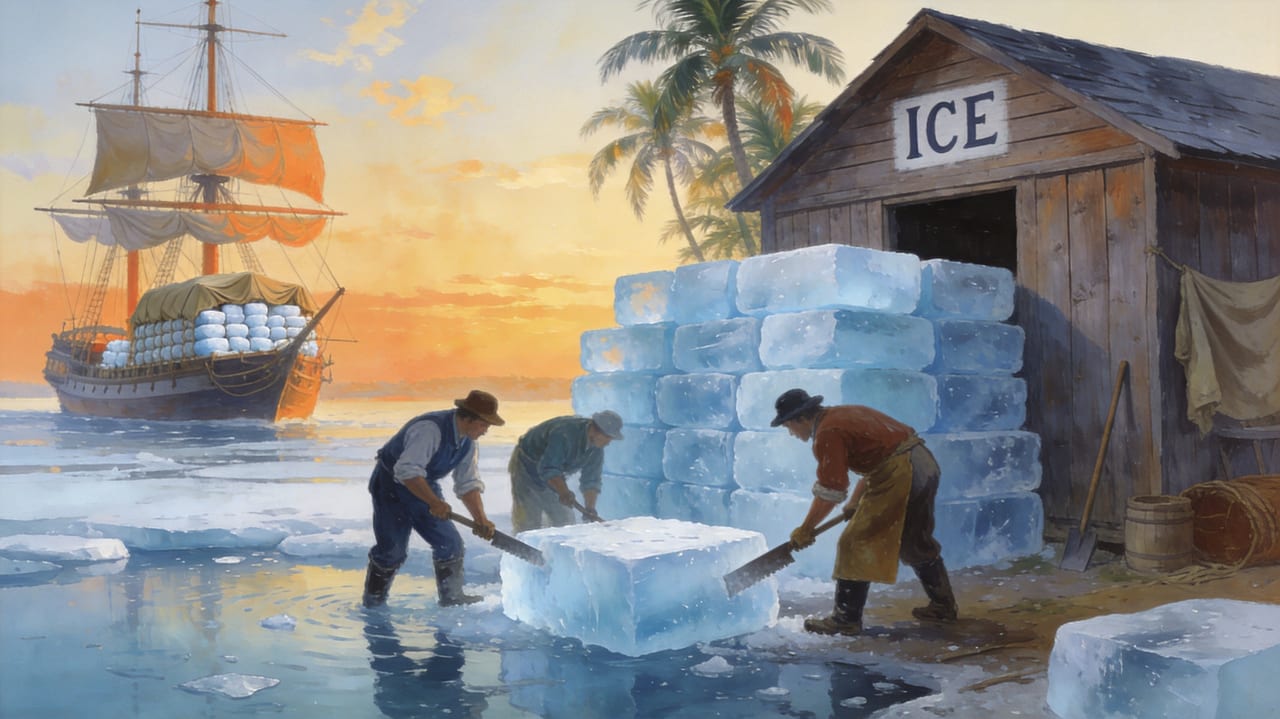
In the 1800s, businesses sent ice by ship from cold places to warmer countries. Ice from lakes in New England traveled as far as the Caribbean and India.
In winter, workers cut thick ice into large blocks and put them in special buildings. The work was hard. Businesses needed workers, transport, storage space and paying customers.
How did ice last on long journeys? The aim was to make it melt more slowly. Workers packed large blocks close together. They put very small pieces of wood around the ice to keep heat away. Some ice melted, but enough could reach customers. Losing too much meant losing money.
Sellers brought ice to homes and businesses. Before electric fridges were common, some families used an icebox: a cupboard with space for ice. As the ice melted, it took in heat and kept food cool. People had to remove the water and buy new ice regularly.
Not everyone could get ice. It cost money, and some places were harder to reach. In hot summers, more people wanted ice, but keeping it cold was harder.
Later, machines made ice, so people needed less ice from lakes. Electric fridges slowly changed things again, at different times in different places. People no longer needed to bring so much winter ice into summer.
评论
0分享你对本文的理解、发现,或仍然觉得困难的地方。