When AI Learns the Wrong Clue
分级文章 · 2:07 · B1 · 内容由 AI 生成
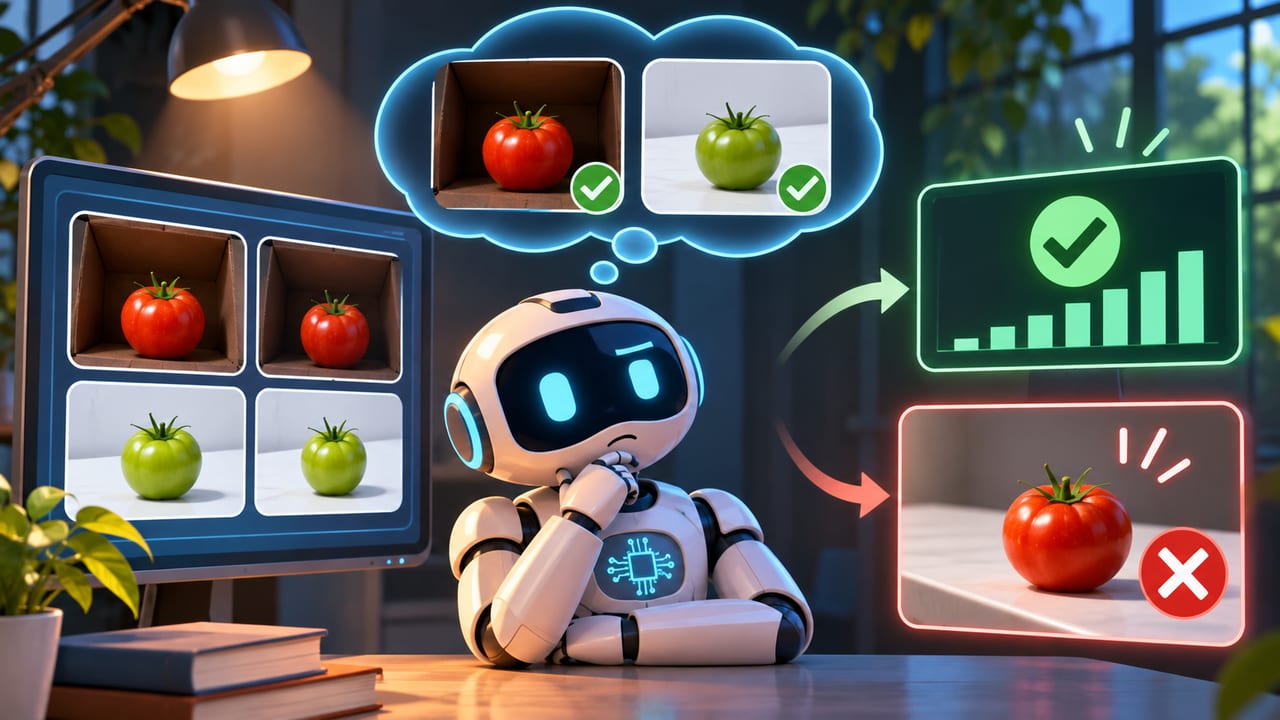
An AI system can perform well in a test and still fail at its real job. Sometimes this happens because it has learned a useful-looking pattern that is not the pattern people wanted. Researchers often call this shortcut learning.
Imagine a company training an AI system to sort photographs of ripe and unripe tomatoes. This is a hypothetical example. Workers provide pictures with labels showing which tomatoes are ripe. During training, the system makes predictions, compares them with the labels, and adjusts its internal settings to reduce errors.
But suppose most ripe tomatoes were photographed in dark boxes, while most unripe ones were photographed on white tables. The background now provides an easy clue. Instead of relying mainly on the tomatoes 'appearance, the system may learn to depend on the box or table.
This can happen because training rewards correct answers, not necessarily the right reason for an answer. The system is not choosing to cheat. It is finding patterns that help it succeed on the examples it receives.
If the test pictures have the same background pattern, the results may look excellent. Yet a ripe tomato on a white table could cause trouble. The connection that helped during training no longer holds.
One way to look for this problem is to change conditions while keeping the important feature the same. Testers could photograph ripe and unripe tomatoes against several backgrounds. They could also check pictures taken under different lighting. These tests help reveal which clues affect the answers.
More varied training examples can reduce unwanted shortcuts, but they cannot guarantee success in every situation. Real workplaces contain changes that a training collection may not include.
The lesson is simple: a high test score matters, but so does the test itself. Before relying on AI, we need to ask whether it has faced the kinds of differences it will meet outside training.
评论
0分享你对本文的理解、发现,或仍然觉得困难的地方。