Venice Beyond the Gondolas
Adapted · C2 · 分级文章 · 1:54 · C2 · 内容由 AI 生成
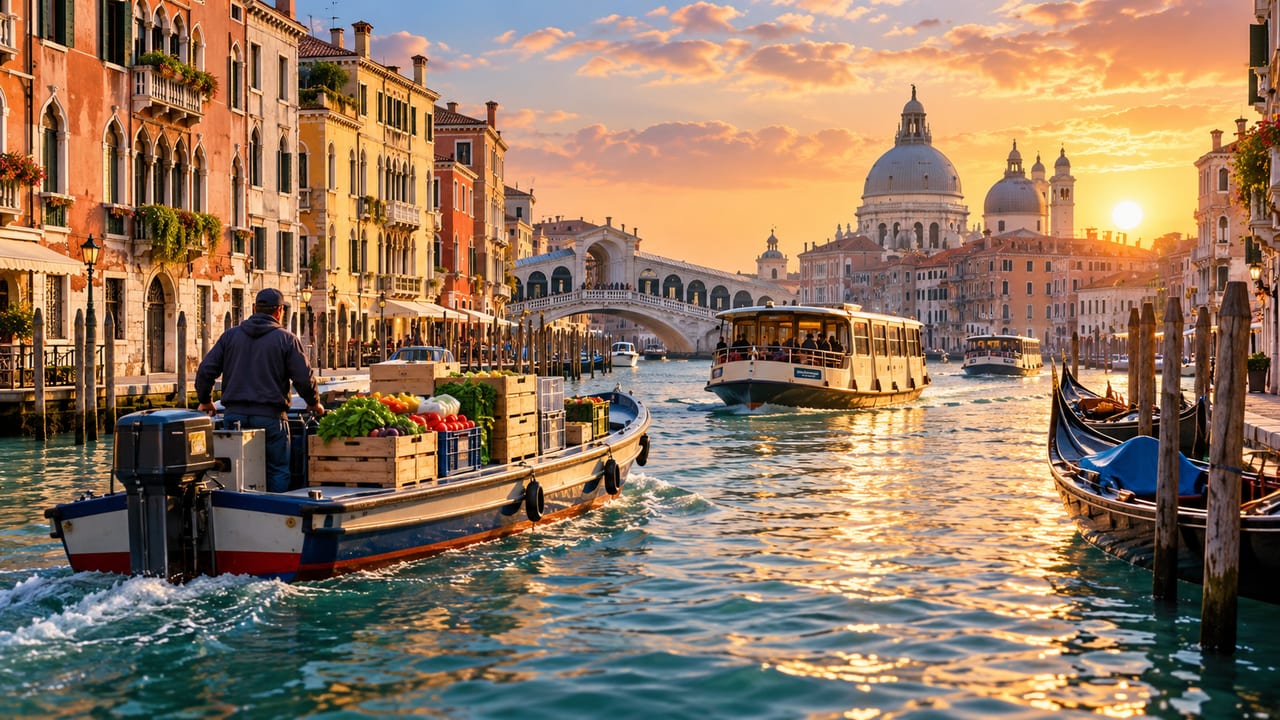
In photographs, Venice often appears as a city of gondolas—traditional narrow boats—and beautiful bridges. For residents, however, the water is more than a view. It shapes the journey to work, food deliveries, and even the effort of carrying shopping home. A visitor sees a canal; a resident may see a transport route.
Venice's historic centre stands on a group of small islands in a shallow lagoon. Canals separate areas of land, while bridges connect them. Road vehicles can reach the western edge but cannot continue through the narrow streets. Within most of the historic centre, everyday travel is on foot or by boat.
This creates a different idea of a main street. A busy canal carries passenger boats, delivery boats, and other working vessels. Vaporetti, the city's public water buses, follow major routes, connecting different parts of the city and nearby islands. Gondolas are famous, but they are not the main form of public transport.
On land, distance is not the only consideration. A short walk may involve several bridges with steps. For someone carrying a heavy bag, using a pushchair, or with limited mobility, that route can become difficult. The nearest place on a map is not always the easiest to reach.
The same geography shapes deliveries. Goods can arrive by boat and then travel through the streets on handcarts. Workers must negotiate narrow passages and bridges rather than simply park a van outside every door. Behind a café table beside the water lies a supply journey that visitors may never notice.
None of this means that every resident follows the same routine. Homes, jobs, and physical needs differ. Yet Venice shows how strongly a place can shape ordinary habits. Looking beyond its famous views reveals not just an unusual city, but a working city whose daily life is shaped by the meeting of land and water.
评论
0分享你对本文的理解、发现,或仍然觉得困难的地方。