How Beavers Turn Streams into Ponds
Adapted · C1 · 分级文章 · 1:42 · C1 · 内容由 AI 生成
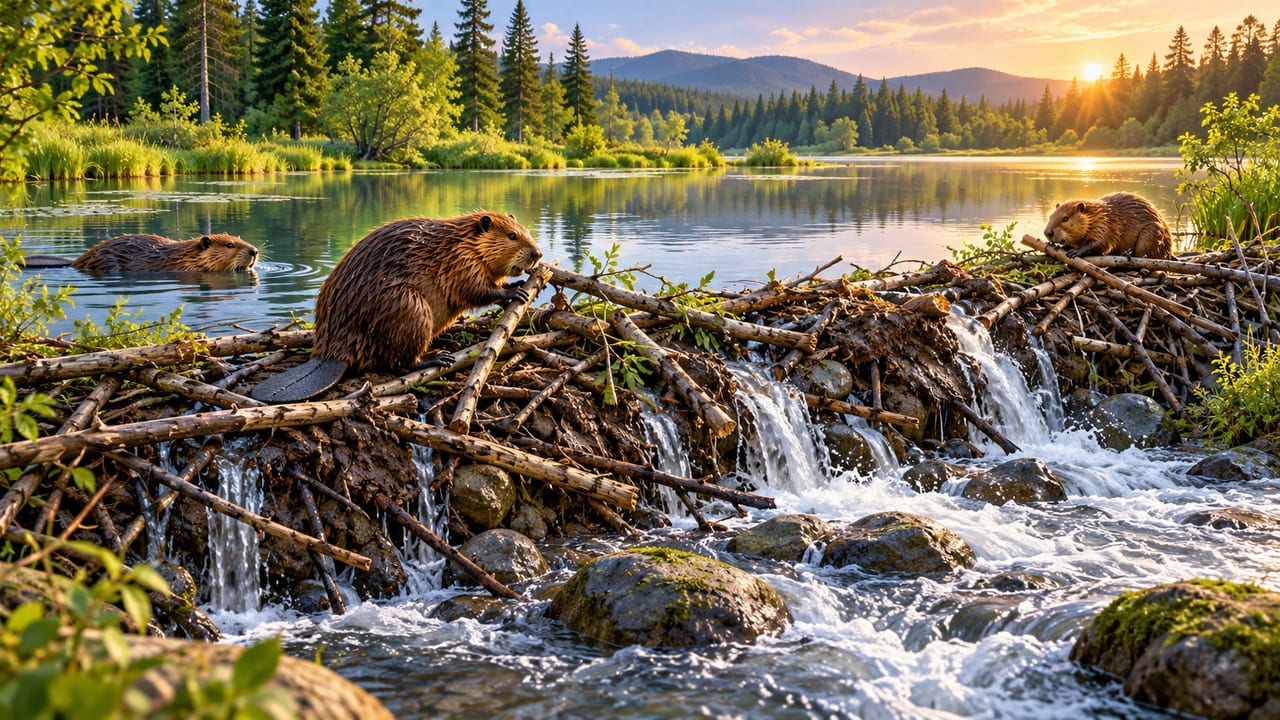
A line of branches across a stream may look like fallen wood. Sometimes, however, it is a structure built by beavers—animals that build barriers across streams. By changing how water moves, they can transform the surrounding area.
Beavers use branches, stones, and mud to build dams. A dam partly blocks a stream, slowing its flow and raising the water level behind it. Water can still pass through gaps or flow over the top, so the result is often a pond rather than a completely closed pool.
A deeper pond gives beavers safer access to food and shelter. They move more easily in water than on land, and underwater entrances to their homes help protect them from predators. The dam is not usually their home: they may live in a separate structure or a hole in the stream bank. Not all beavers build dams, since some already live beside water that is deep enough.
Slower water also affects the soil. Fast-flowing water carries small pieces of earth downstream. When it slows, some of this material settles on the bottom. Over time, this can help form areas of soft, wet ground. Water may also spread sideways into the surrounding soil.
These changes create places where different plants and animals can live. Frogs may breed along the shallow edges, while insects provide food for birds and fish. However, not every species benefits. A pond can cover plants that need drier ground, and the effects of dams on fish movement vary depending on the stream and the fish.
Beavers are often described as animals that physically reshape their surroundings. Their dams show how one species, while meeting its own needs, can transform the homes of many others.
评论
0分享你对本文的理解、发现,或仍然觉得困难的地方。